Wire Mesh vs. Trough Cable Tray: Which One Fits Your Project?
What wire mesh tray actually is
Wire mesh (basket) tray is welded from steel wire, typically 4-6 mm, and finished either electro-zinc (EZ) or hot-dip galvanized after fabrication. The open structure gives 40-60% free airflow around cables, which is why data-center designers favour it for structured cabling and fibre routes. It is light (a 300 mm x 100 mm mesh run weighs roughly 1.5-2 kg/m), fast to install with universal splice plates, and easy to branch with ready-made T, cross and riser accessories.
See the full size and specification comparison table
What trough tray adds
Trough (solid-bottom) tray, by contrast, provides full mechanical protection and continuous EMI shielding. For power cables, especially medium-voltage feeders, or wherever falling debris, dust or rodents are a concern, trough tray is the safer choice. Indoor feeder corridors and electrical rooms commonly combine both: trough for power, mesh for data.
Which type to choose for your cable
Three practical rules our export team uses when advising buyers: first, follow the cable type — data/fibre goes mesh, power goes trough or ladder; second, follow the environment — corrosive or outdoor areas need hot-dip galvanized or stainless / FRP, never bare electro-zinc; third, follow the load — above 50 kg/m or long spans between supports, move from mesh to ladder or reinforced trough.
How standards and load data enter the order
IEC/EN 61537 sets the dimensional and load classes for tray systems, and NEMA VE 1 is the equivalent reference in the North American market. Both are dimensional and load-class references, not product certification. When a project names a class, ask for the tested deflection data behind that exact section, and send us the cable schedule and support spacing — we will size the tray and return a load calculation with the offer.
Mesh and trough compared side by side
The table below sets out the differences that decide the specification. Where a figure is not published for one of the two types, we say so instead of estimating; the complete dimension and weight schedule for the selected section comes with the quotation.
| Item | Wire mesh (basket) tray | Trough (solid-bottom) tray |
|---|---|---|
| Structure | Welded steel wire mesh, wire Ø4–6 mm | Continuous folded steel bottom, sheet 0.8–2.5 mm |
| Ventilation | Open structure, roughly 40–60% free airflow around the cables | Closed bottom, no natural airflow from below |
| EMI shielding | None — open structure, cables fully visible | Continuous closed raceway, provides continuous shielding |
| Unit weight | 300 × 100 mm run ≈ 1.5–2 kg/m | Heavier than mesh of the same width — depends on sheet thickness; unit weight is quoted per order |
| Fill ratio | Open mesh: higher fill acceptable for data and fibre | Power and control cable: 40% maximum |
| Support span | 1.0–1.5 m with Ø4 wire, 1.5–2.0 m with Ø5 wire | 1.5 m typical; 1.0–1.2 m at 400–600 mm width or heavy loads |
| Typical use | Data centers, telecom rooms, offices, retail fit-outs | Commercial buildings, plants, parking structures, MV feeder routes |
| Finishes | EZ / GS / GC / DC / 316 electropolished | EZ / GS / GC / DC, stainless 201–304–316L, aluminum |
Products related to this article
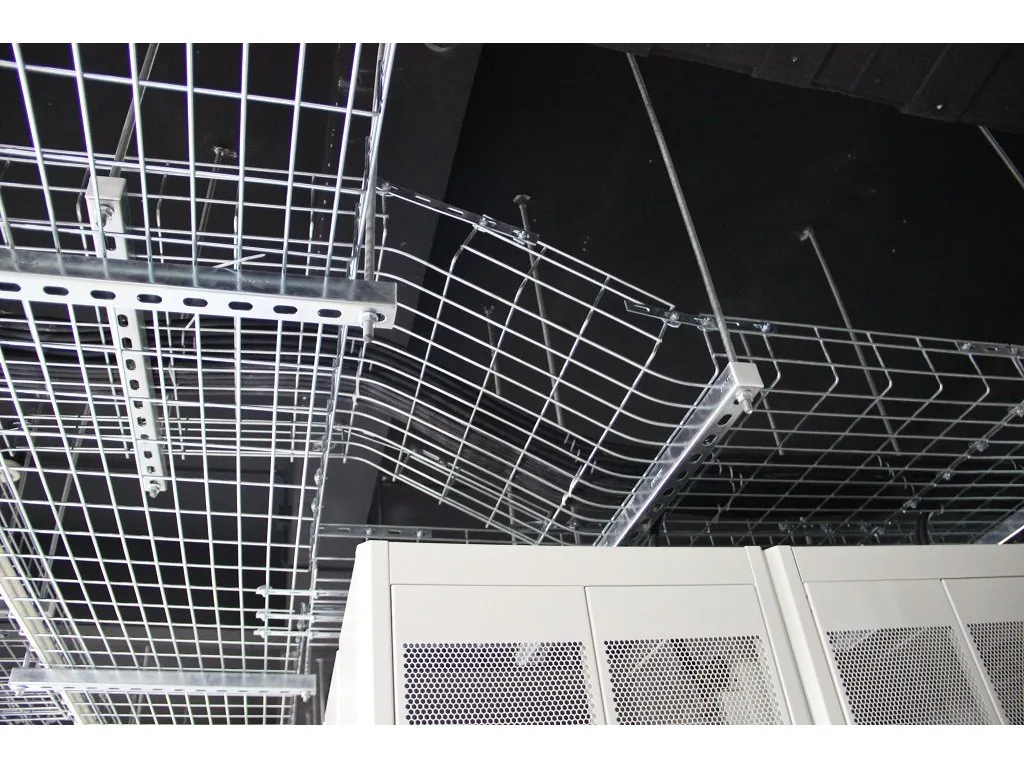
Wire Mesh Cable Tray
Wire mesh cable tray (basket tray), WS-T/I/S/C series, φ4–6 mm wire, Q235/S304/S316, EZ/GS
View product →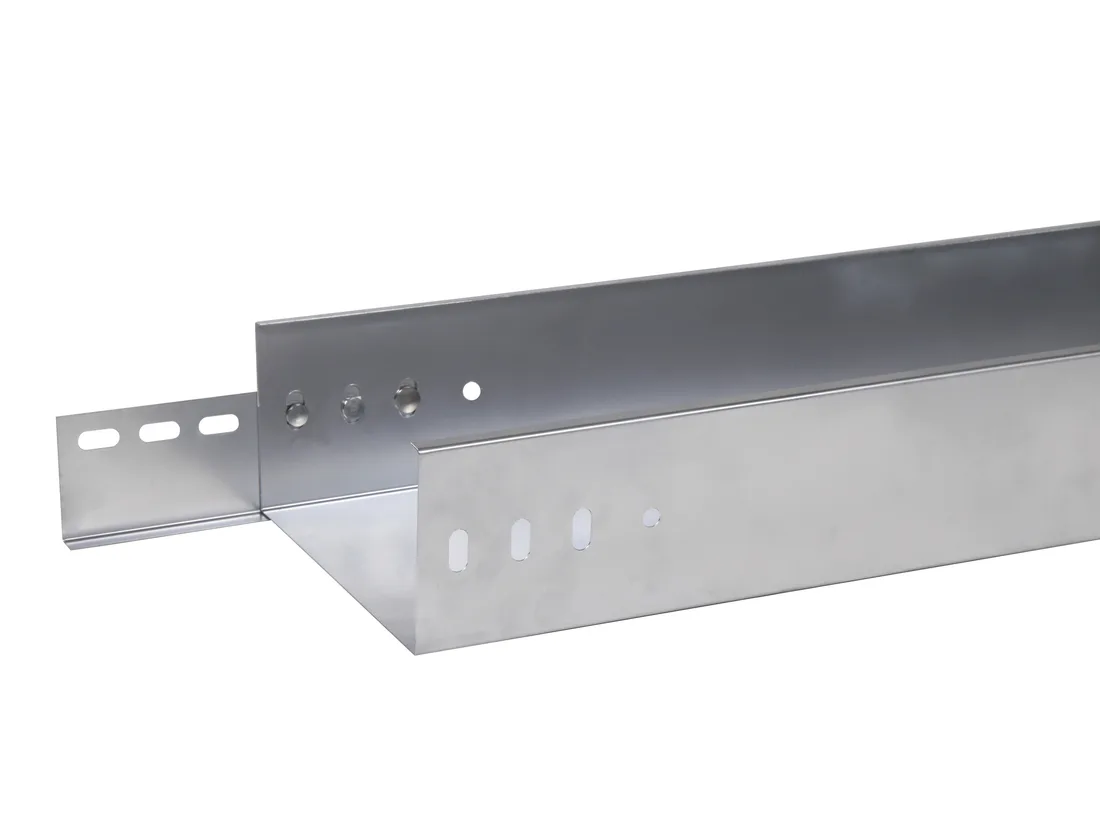
Channel Cable Tray (Solid Bottom)
Solid bottom channel cable tray: galvanized steel, stainless and aluminum, width 50–600 mm
View product →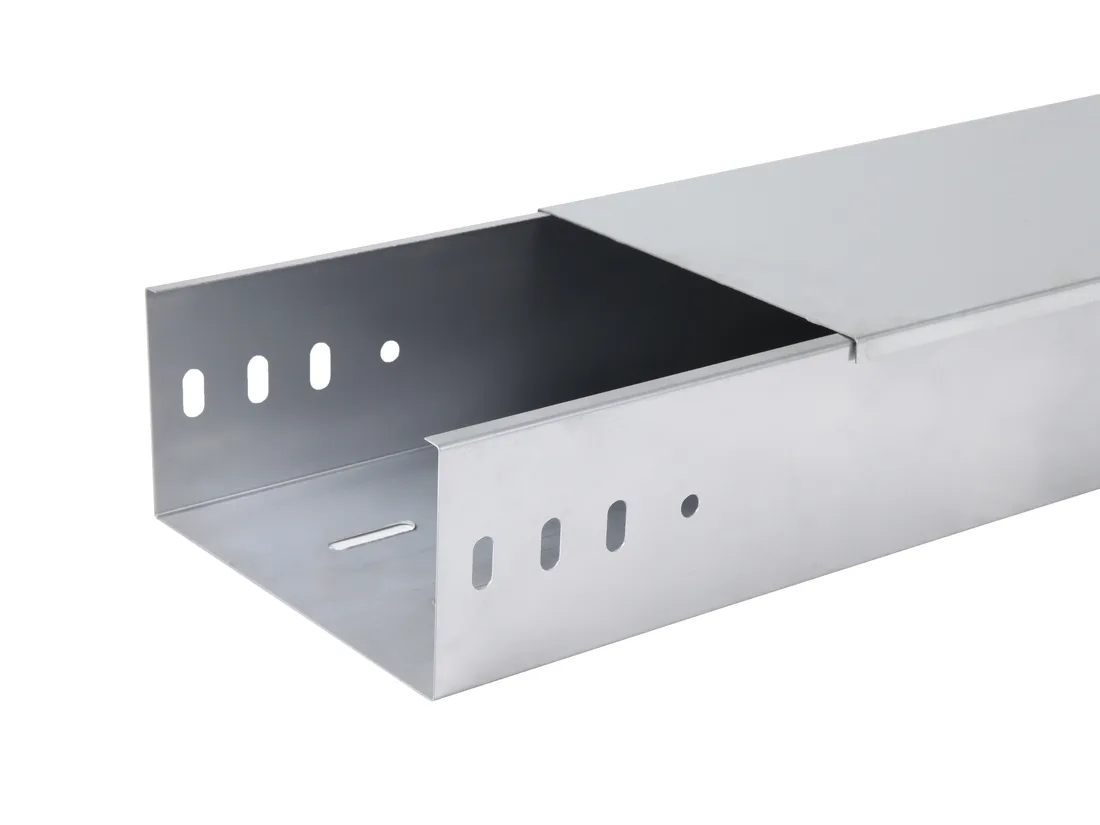
Perforated Cable Tray
Perforated cable tray with ventilated bottom, width 50–600 mm, galvanized or powder coated
View product →